
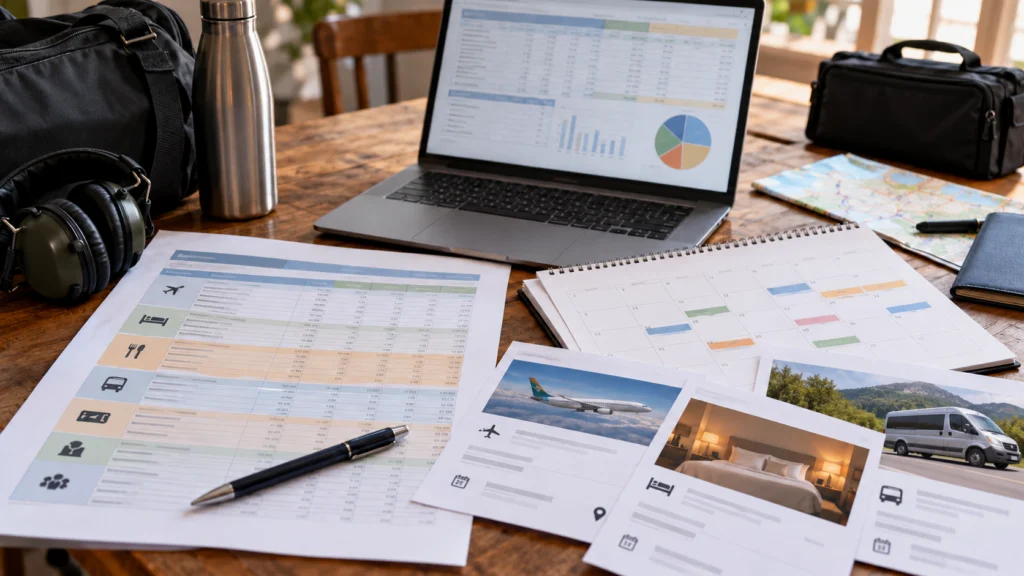
A season budget should include more than entry fees. Travel, accommodation, meals and ordinary preparation can make one distant event cost more than several local visits. Start with the events you realistically want to attend and a household limit that does not depend on results.
Price each event as a complete trip
Use current host and provider information for fees and bookings. Include the route between accommodation and the venue. Do not copy an old event’s price into the new season without verification.
Separate necessary costs from optional clothing, souvenirs or upgrades. A lower entry fee does not automatically make the whole weekend cheaper. Compare the complete usable plan.
| Category | Include | Review |
|---|---|---|
| Event | Current fee and stated terms | Confirmation and withdrawal conditions |
| Travel | Transport and local connections | Realistic return timing |
| Stay and meals | Accommodation and food plan | What is included? |
| Optional spending | Non-essential purchases | Can it wait or be omitted? |
Put deadlines on the cash calendar
Registration, accommodation and travel may require payment at different times. Show those dates so an affordable annual total does not hide a short-term gap. Keep money for essential household commitments protected.
FCAC’s budgeting guidance recommends comparing planned and actual spending. Use that after each trip to update the season forecast rather than treating every overrun as an isolated exception.
- Set the season ceiling before booking.
- Use current verified prices.
- Include cancellation exposure for each provider.
- Review actual spending before adding another event.
Choose participation deliberately
A shorter season or more local events can be a thoughtful choice. Do not assume every possible competition must be attended to belong to the community. Include volunteering or observation where those fit your interests and host arrangements.
Keep regulated equipment costs and requirements within current official guidance and qualified advice. This article addresses household planning, not purchasing or transport instructions for controlled items.
For example, give each proposed weekend its own row with three separate figures: the full estimated cost, the amount payable now and the amount still refundable under the confirmed terms. After returning, add the actual total and one explanation for a difference, such as an extra overnight stay. That record helps you decide whether a later trip still fits; it is more useful than reducing every event to its entry fee.
Questions and answers
Should entry fees be the only comparison?
No. Travel, accommodation and other costs can dominate the total.
Can I budget using hoped-for prizes or winnings?
Do not rely on uncertain outcomes for household commitments or attendance costs.
What if an extra event exceeds the plan?
Review priorities and the full budget before committing. Fewer well-planned events may be more sustainable.
Sources: canada.ca.